A few years ago, famous film critic Roger Ebert wrote an extensive article in the Chicago Sun Times stating that video games can never be art. I highly suggest reading the article in the link provided, as he greatly expands on his thesis and gives detailed explanations of his thought process using examples that I, as a gamer, would have potentially considered as 'art games' myself.
These articles and arguments have been around in 2010. I remember reading this article when it came out, and the frenzy that happened in the gaming community was rather entertaining to watch. I also thought that Ebert was talking about something which he didn't understand, but as time goes on I am beginning to come around to his conclusion in some cases, and in other arguments I am beginning to find flaws as the video game scene is growing and developing.
One of the biggest problems with trying to identify video games as art is that video games contain all the elements of art. It has visual style, a (usually subpar) story, music of some variety, an aesthetic and atmosphere, and many design choices that someone would associate with art of some way, shape, or form. As such, video games challenges us to redefine "what is art?" as movies have done so a century ago.
The definition of art is something personal to each person. For example, some people find pop-art styles and icons such as Banksy as the pinnacle of sophistication, intellectualism, and meaning while others think he's just a nuisance on their walls. As Roger Ebert pointed out in his article, for every definition of art there are examples which would disprove that definition, and as such the lines defining art would get so rigid that it would become impossible to allow anything new into the category of 'art'. Instead, what I'm going to do is look at games, and to see what makes a good game and bad game.
Rather than compare games to existing art, I want to see if I can find a conclusion as to what is 'art' in form of a game. I will probably end up comparing it to movies, music, and so on but the primary goal is to look at video games as an individual sub-catagory as 'art' and find what could be or not be art.
The Problems
Video games have a few problems which game designers are slowly figuring out. The first of which is integrating plot into a story. One of the defining characteristics of a video game from any other form of entertainment or art the interactive nature of the game; the ability to define the progress of the game through personal interaction. Stories, however, have the problem that they have a desire to be linear. To have structure in a story you need to have a premise, development, climax, and a conclusion. As such, video games and story have a difficult interaction. Let us first look at some of the most plot heavy genres of all video games: RPGs.
The opening to Final Fantasy 13
The biggest problem with the RPG is that you have no personal interaction in character; due to the complexities of the story your interaction, and therefore ownership, of the characters is quite limited. While some RPGs are more successful with this than others, the interaction of the characters have been, for ages, completely out of user control.
There are, of course, exceptions to this. The Dragon Age series (especially Origins, and from what I hear, Inquisition) both really allow the user to take control of a generally unknown main character and control the plot in various ways. Even then, however, the overall story is unavoidable, the ending still the same ending no matter what choices you make, and the choices that happen aren't from your actions, but from a complex dialogue tree. While these choices to affect later games, it is still, in essence, a linear journey.
There is only one game that comes to mind where users create the story, and that is EVE online. This game is very different and probably deserves its own article. Basically the game allows players to create alliances to control in-game space and resources. These groups fight over control of various stars, important strategic areas, and so on.
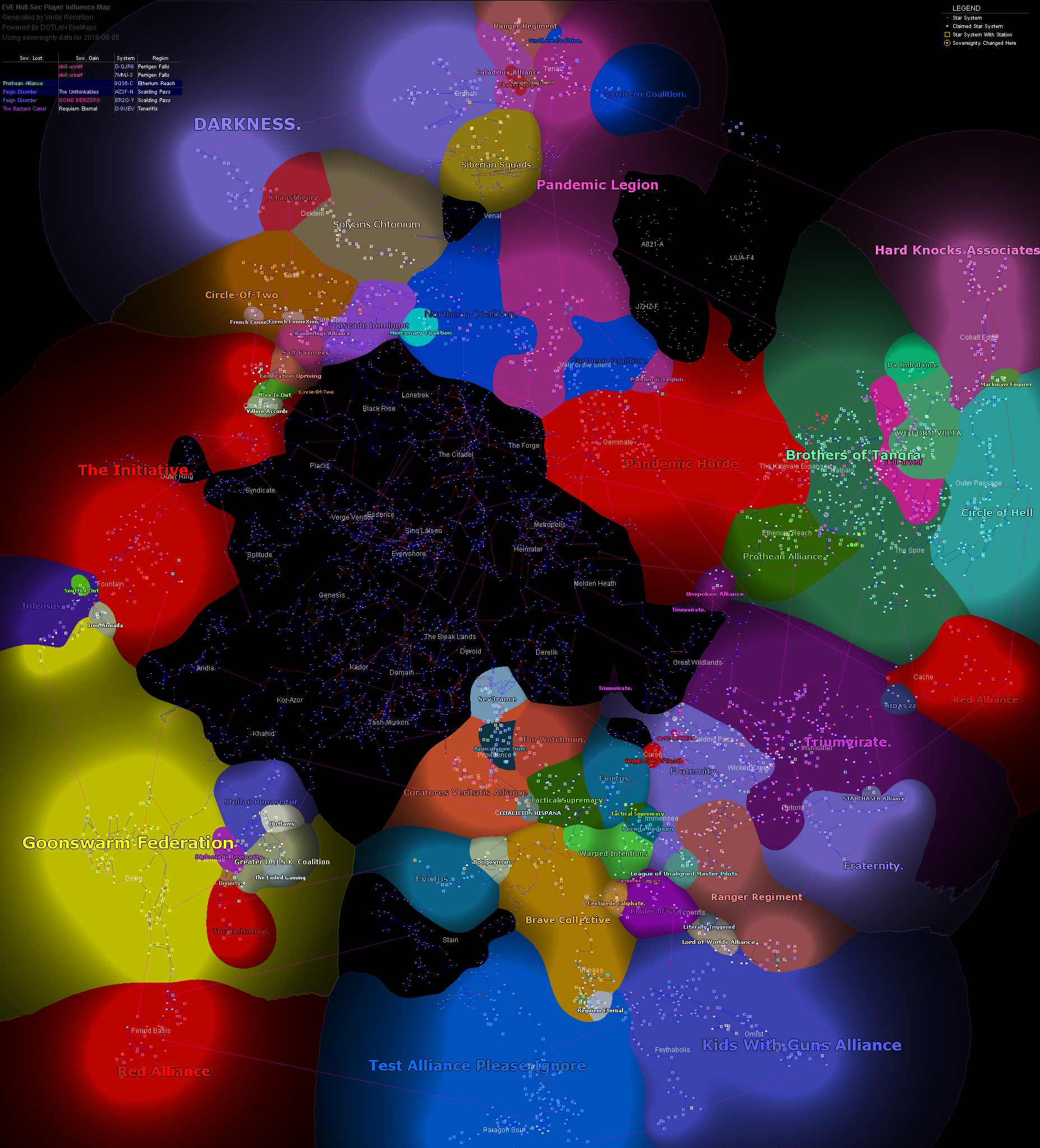
With EVE comes multiplayer experience, and with another question arises: Can multiplayer/competitive games be considered art? According to both the Roger Ebert and the TED talk by Kellee Santiago, multiplayer games cannot be art, just like how chess and football, no matter how splendidly or cunningly played, cannot be art. In general I agree: While people might remember amazing sporting like the Miracle on Ice or Ursain Bolt beating the 100-meter world record, these events are not art.
Another problem with games is the shelf life of games. Unless they are constantly renovated with updated graphics and game play (a la League of Legends, WoW, etc) modern games frequently and rapidly become out of date. Compare this to Gregorian chant, which has been around for literally 1500+ (depending where you want to place the beginning of chant) years and is still used in modern music/film. Paintings need to be restored, but it is done not to update the visual style but to preserve what is already there. There are a few games which I would have put as potentially art games (Homeworld, maybe Mario Bros) but if they need to be updated can you say that they are as long lasting and relevant? Will we still be playing and preserving the original Super Mario Bros in a millennium as we do Gregorian chant? I certainly don't know the answer, but considering the consumerist nature of gaming I have a feeling that these games will eventually get lost or moved to irrelevance.
The Good
Within gaming, however, new innovation is coming out, and some of which I think is indicative of an artistic nature. The first being a little indie game called the Stanley Parable. Warning: This section will contain some level of spoilers for this game and potentially others. If you haven't played the game and were thinking of it please skip this.
There are many reasons why I think The Stanley Parable, while being a self critical parody, is one of the few games ever made that can be considered an art game. The first major reason being that this is the only game (to my knowledge) where the game narrative reacts to what the player chooses to do. This isn't just a gimmick but also demonstrates the level of integral narrative that could be in modern games. The reasons to not do this is pretty obvious: the amount of voice work and the amount of world building would be prohibitively expensive and the costs would rapidly increase as the game world grows. Due to this, the game is pretty simple, being only a few hours long.
Another reason why the game could be considered 'pop' art is due to how the game expands beyond... the game (yeah it's a bad sentence). Basically this game can cause you to think about your own life. Are you simply following the preset plan in narrative or are you trying to break out? Is it possible to break the narrative? The Stanley Parable raises personal questions. I remember showing this to some people and they were uncomfortable with how this game portrays 9-5 jobs, the incessant grind of mediocrity of the average job.
This game isn't without problems. I know many people don't even consider it a game because you sorta just walk around. This is also the problem with games and narrative: For a game to have effective narrative there has to be a trade off in game-play. As such, for a modern game to be profound there is a give and take between the game being interactive and the experience to be enlightening. There is another game which might have found a solution to this problem in its own way.
Proun is a racing game that is entirely about game-play and art aesthetic. It has no story, but does it really need one? Proun gives players a unique perspective of art. As you 'race' through these very minimalist and fascinating 3d landscapes the game becomes much more about the ambiance and the experience. There is a reason why this game demoed at a couple art museums.
It's great to see that indie games are exploring the combination of narrative and game-play and taking it to new places. That being said, it's really hard for a game to be a medium of self-expression of ideas which can be achieved much more effectively in so many books, films, art, and music. Games are still a young medium, and as such we are still trying to figure out ways to use games to be though provoking and insightful, or just effective and dramatic works of art. Games still are a ways away from having a reactive and cohesive story-telling and playing experience. As games develop, it is possible to see games become this, and it is great to see what will happen in the future.
